Last week I had an errand to run down in Kemptville, so I checked the maps for a trail to visit along the way. I decided on the Rogers Pond loop at Marlborough Forest. There was only one other vehicle when I pulled into the E3 parking lot. It was sunny and breezy, a beautiful day after consecutive rainstorms had recently passed through.
The trail starts in a bit of mixed forest with some common native and introduced plants, plus poison ivy. There is a boot cleaner near the trailhead, which I would advise using on the way in and out.
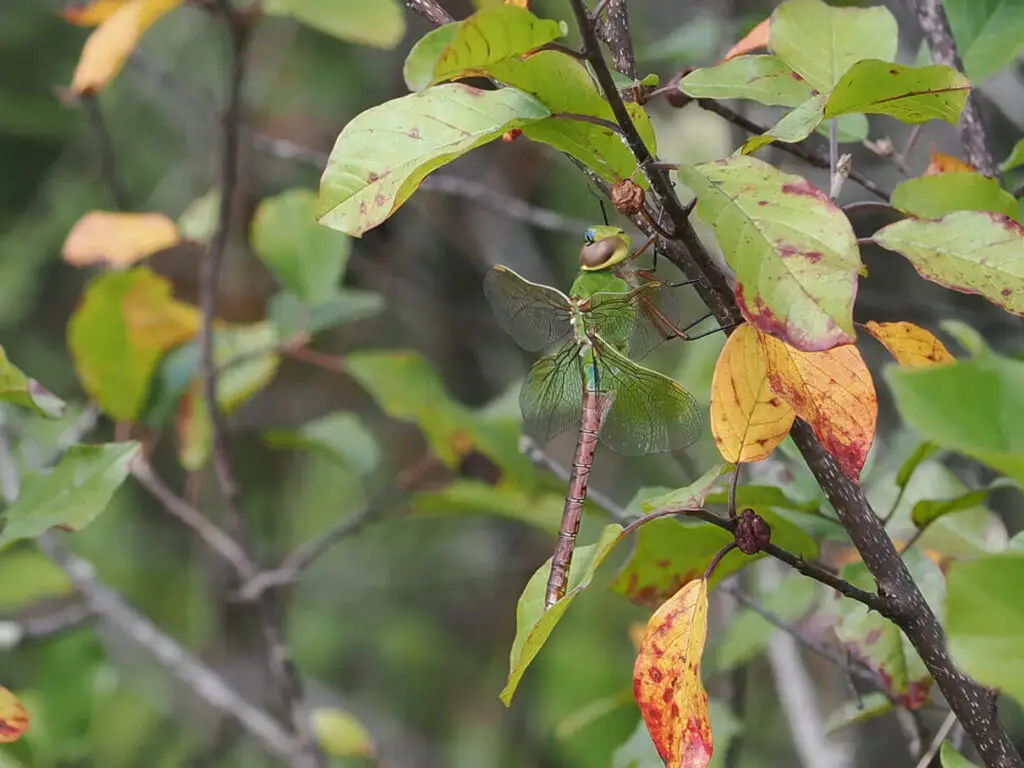
Soon I entered an open, swampy thicket of cedars, dogwoods and unfortunately tons of invasive buckthorn. The water table was very close to the trailside and mosquitos were thick even in late summer, which was true throughout the low, damp loop. This was all likely enhanced by the recent rains. The eastern pondhawk dragonflies didn’t mind!
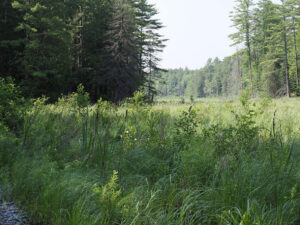
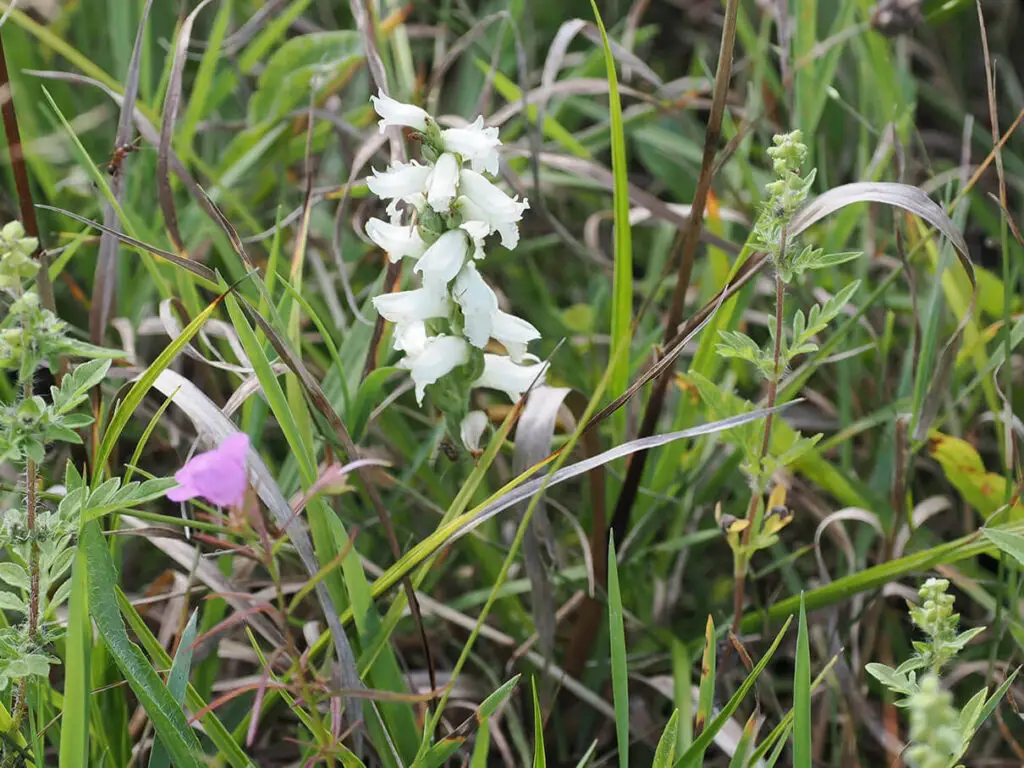
Next, the trail passes through another bit of forest before starting a grassy approach to the pond outlet, controlled by a sluice with a metal footbridge on top. You get the best views of the water here, where I saw a few birds pinwheeling off in the distance. I crossed the footbridge and followed the path through a meadow where I found a single sphinx ladies’ tress orchid in bloom. I was surprised not to pick up a tick on this portion of the hike.
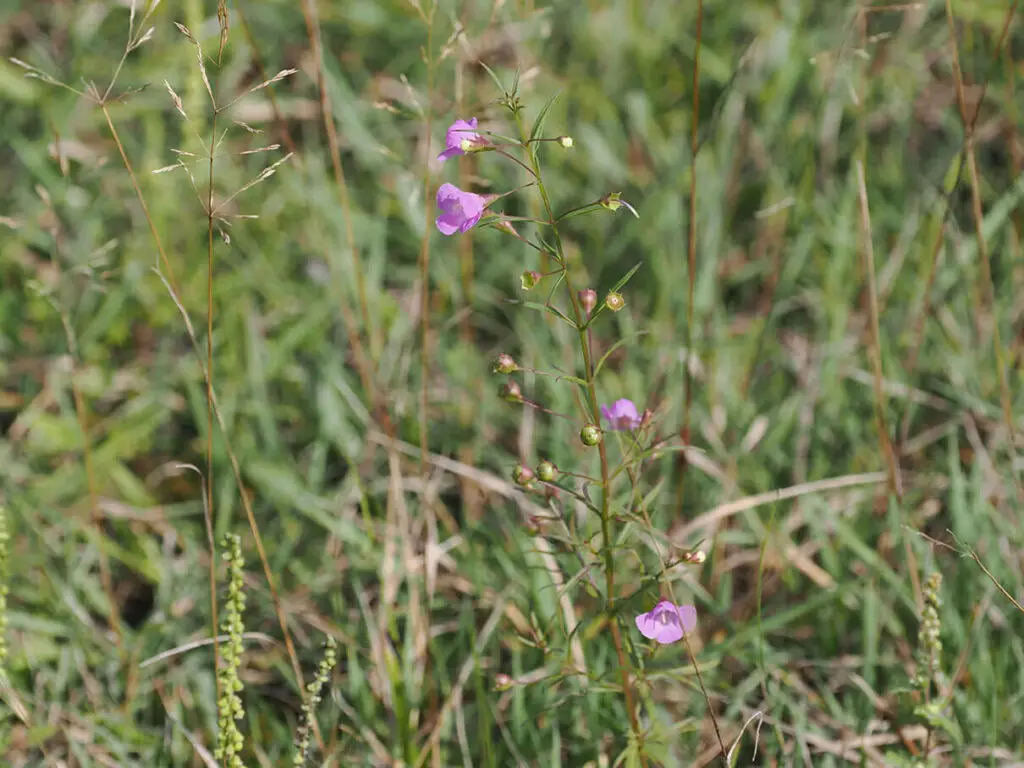
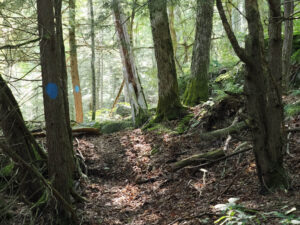
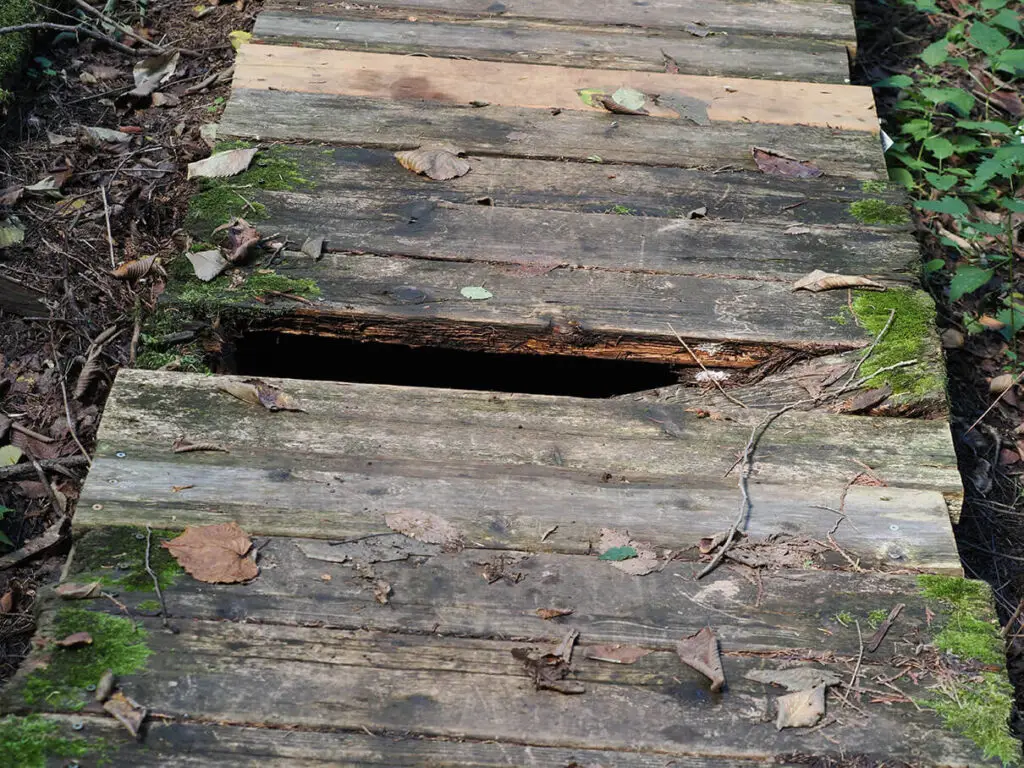
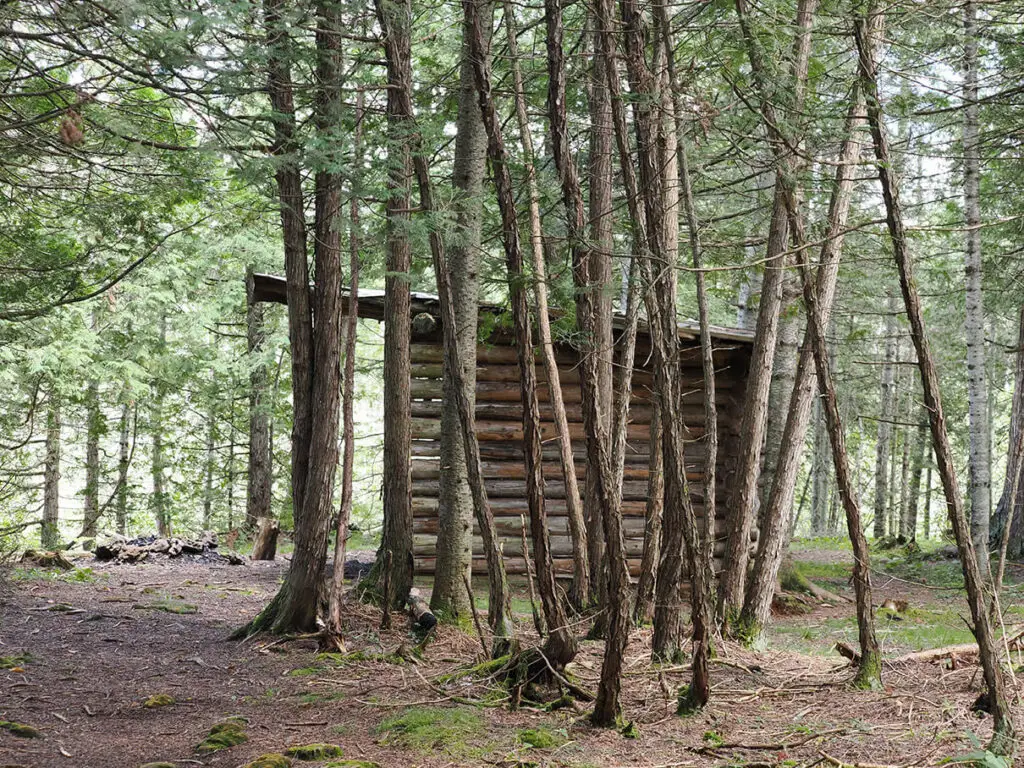
After the meadow, the trail enters the forest and stays there. It varies from cedar swamp to hemlock and birch groves to mixed pine and broadleaf forest. Terrain is low and wet throughout, and in some sections the path is made up of very slippery brownish clay. There is a rotten boardwalk where I stuck my foot through one board, and lots of puddles to traverse. At one point I encountered a small log lean-to with a fire ring and a side trail down to the pond. I did not see any other people, and most of the trail was free of litter.
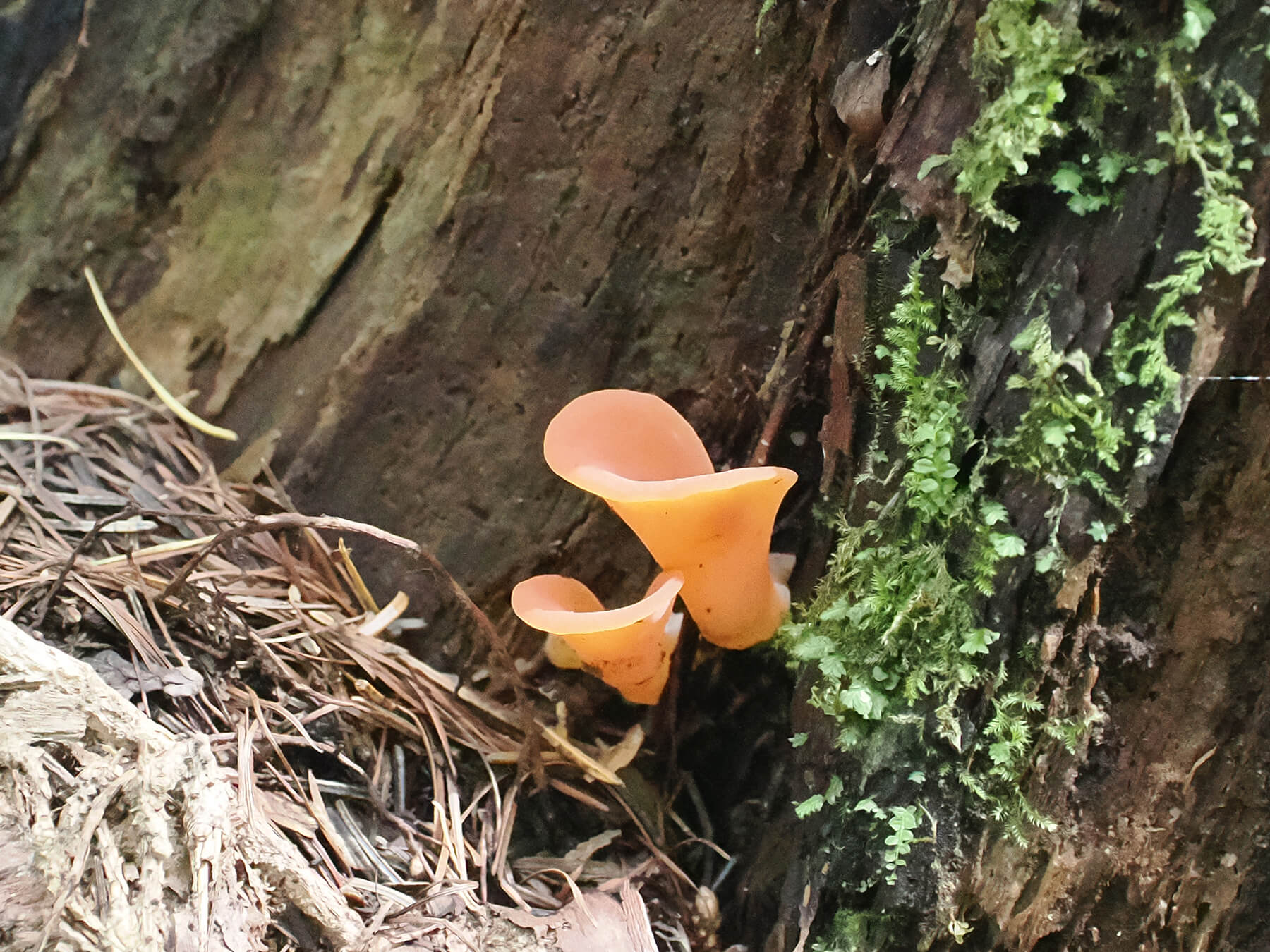
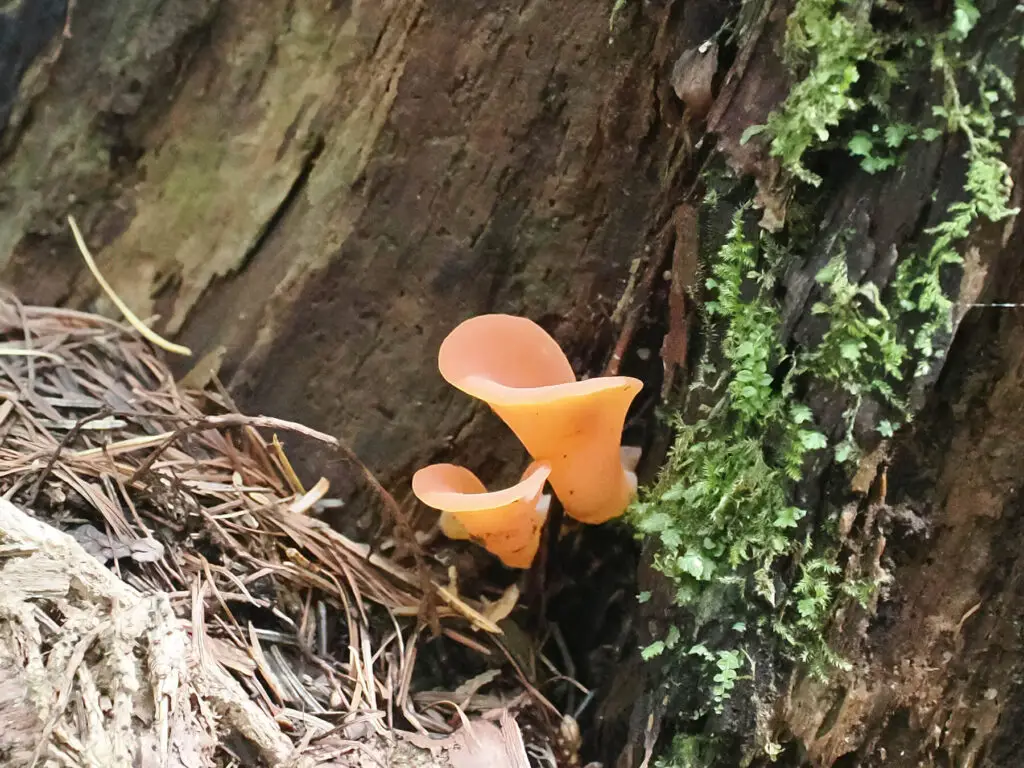
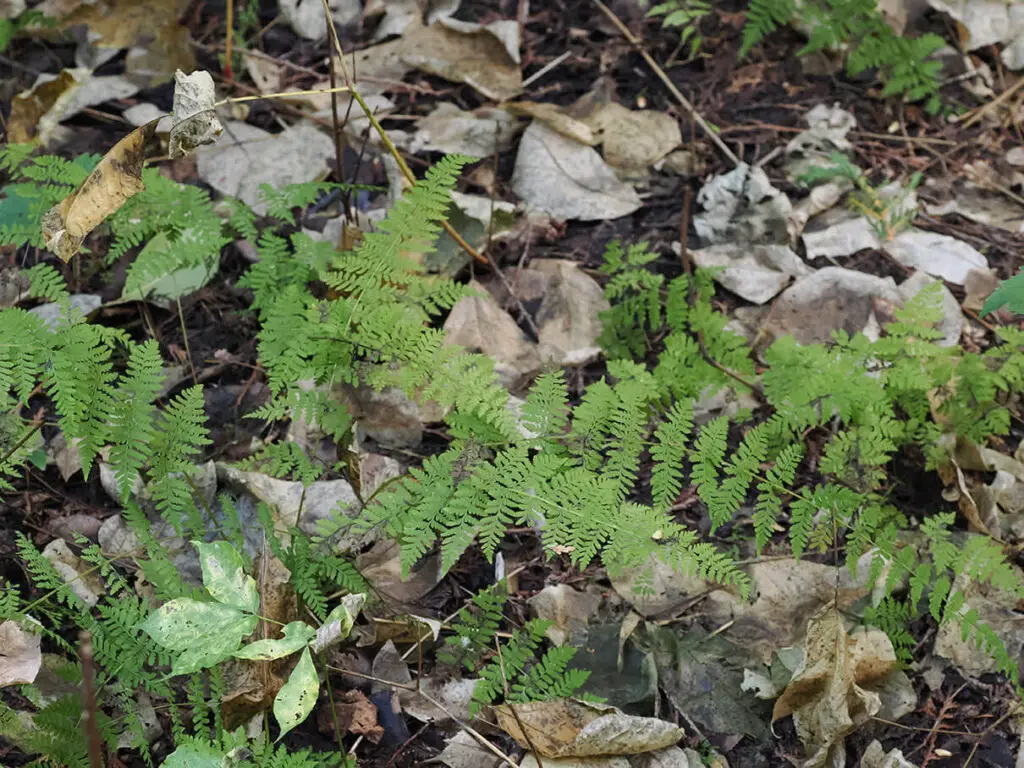
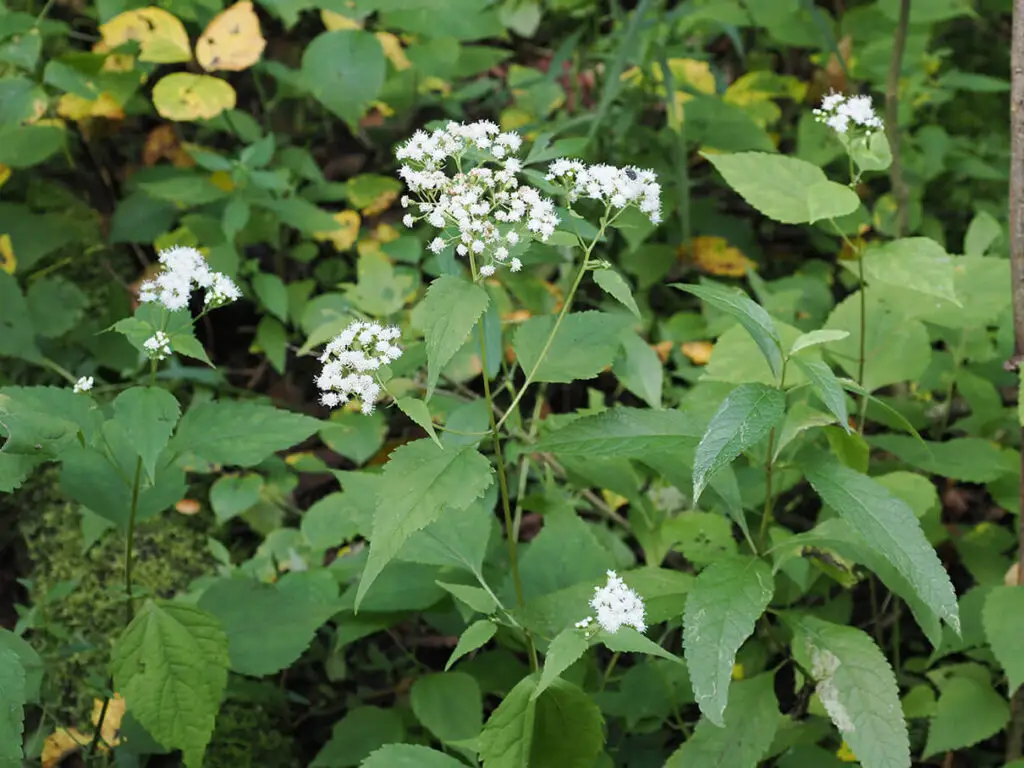
While it wasn’t the easiest trail to hike, my reward was a stunning diversity of mushrooms. That’s a theme for this summer, a welcome change from last year’s super-dry season. The highlight was an area where every cedar tree had one or more apricot jelly fungus, Guepinia helvelloides springing from its base like a cartoon candied tongue. Amazing! Notable plants include bulblet fern and lots of white snakeroot in bloom.
Some other fungi include:
- American dyer’s polypore, Phaeolus hispidoides
- Bay polypore, Picipes badius
- Birch polypore, Fomitopsis betulina
- Blewits, family Clitocybaceae
- Clitocybula oculus
- Common funnel, Infundibulicybe gibba
- Common puffball, Lycoperdon perlatum
- Conifer mazegill, Gloeophyllum sepiarium
- Copper penny fungus, Pachyella clypeata
- Coral tooth fungus, Hericium coralloides
- Elfin saddles, genus Helvella
- Eyelash cups, genus Scutellinia
- Fairy fingers, Clavaria fragilis
- Hairy earthtongue, Trichoglossum hirsutum
- Handsome club, Clavulinopsis laeticolor
- Jelly spot, genus Dacrymyces
- Lycoperdon flavotinctum
- Mouse-pee pinkgill, Entoloma incanum
- Ochre club, Clavariadelphus ligula
- Orange earthtongue, Microglossum rufum
- Orange-latex milky, Lactarius deterrimus
- Pear-shaped puffball, Apioperdon pyriforme
- Pig’s ears (tentative), Gomphus clavatus
- Red-mouth bolete (tentative), Neoboletus subvelutipes
- Ridged tooth (tentative), Hydnellum scrobiculatum
- Saddle-shaped false morel, Paragyromitra infula
- Velvet-foot fairy fan, Spathulariopsis velutipes
- Violet fairy cup, Geoscypha violacea
- Woolly velvet polypore, Onnia tomentosa
- Various amanitas, Amanita spp.
- Various other boletes, family Boletaceae
- Various brittlegills, family Russulaceae
- Various coral fungi, family Gomphaceae
- Various cups, order Pezizales
- Various dapperlings, Lepiota spp.
- Various other pinkgills, Entoloma spp.
- Various rustgills, Gymnopilus spp.
- Various waxcaps, Hygrocybe spp.
- Various webcaps, Cortinarius spp.
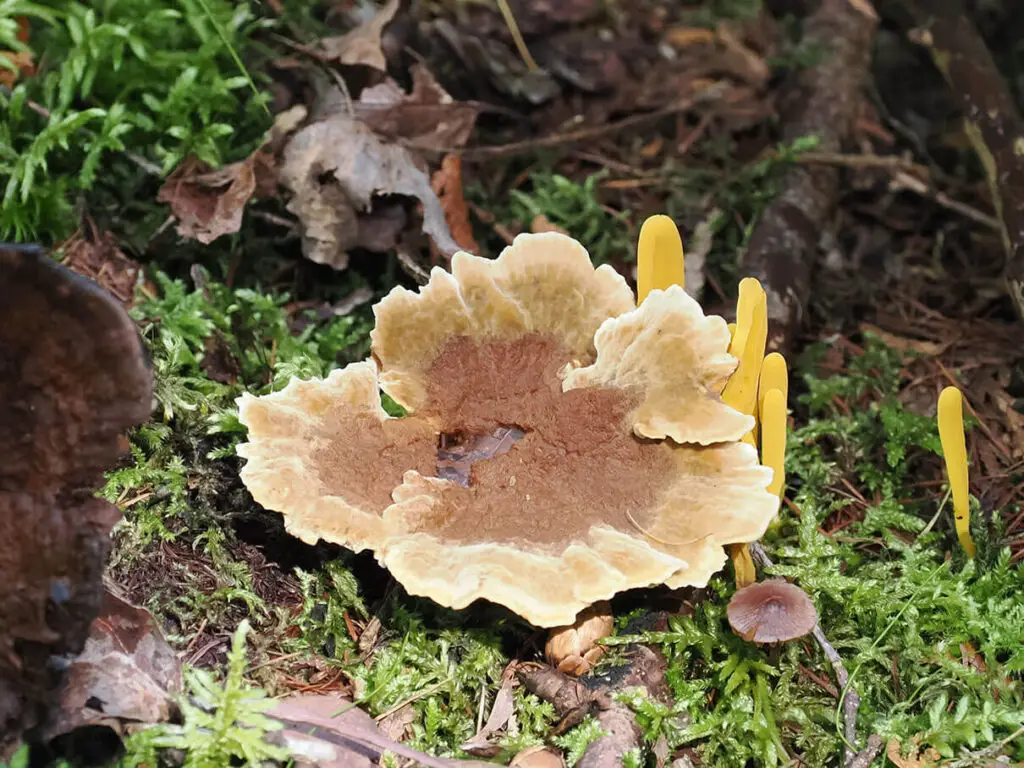
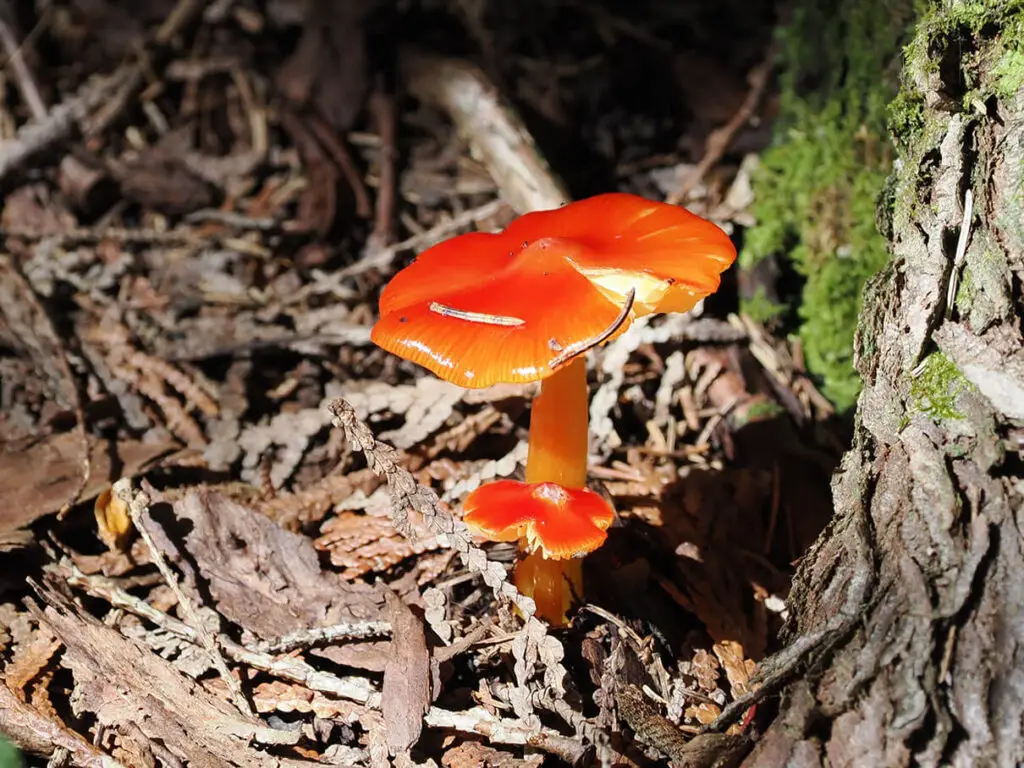
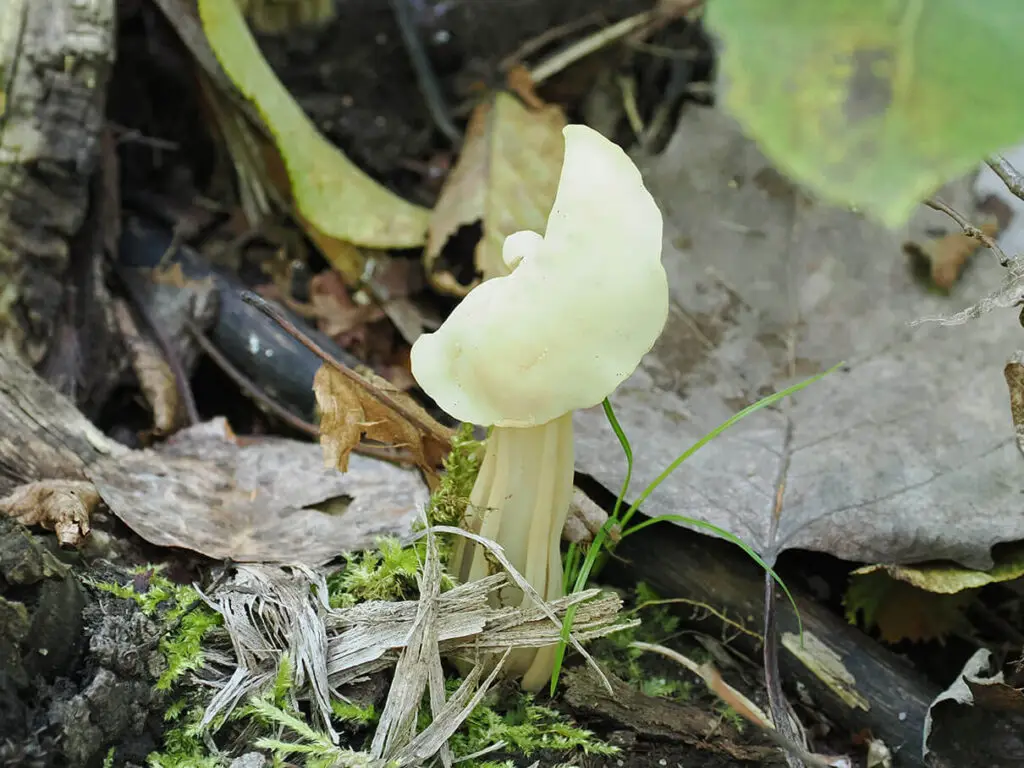
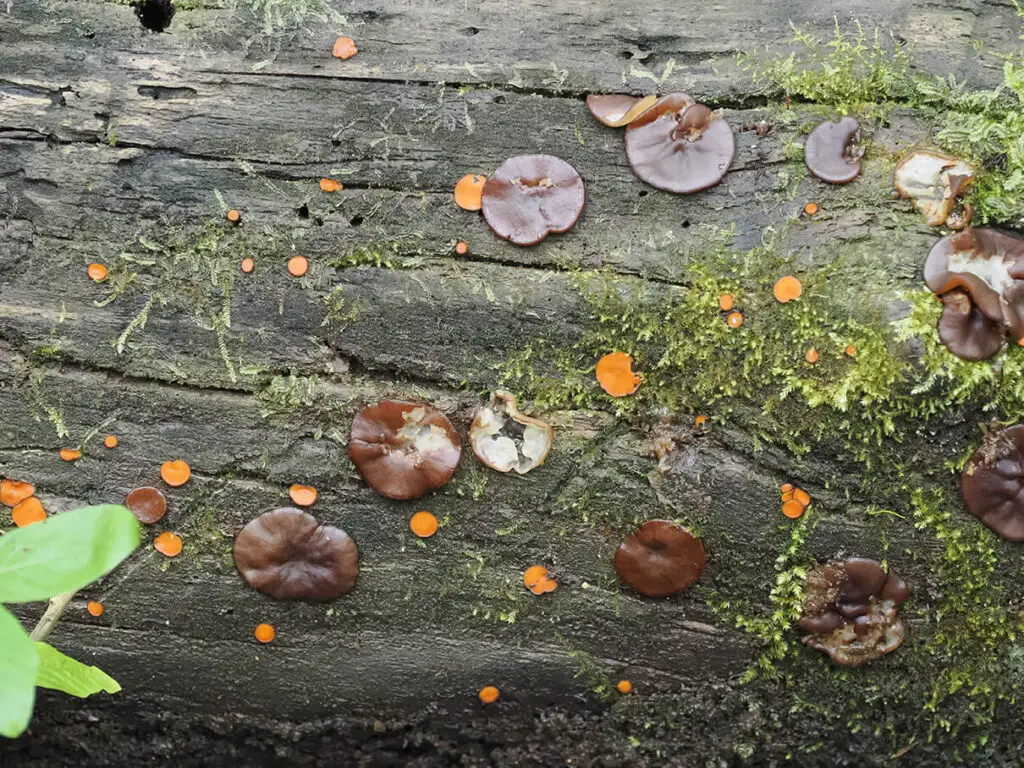
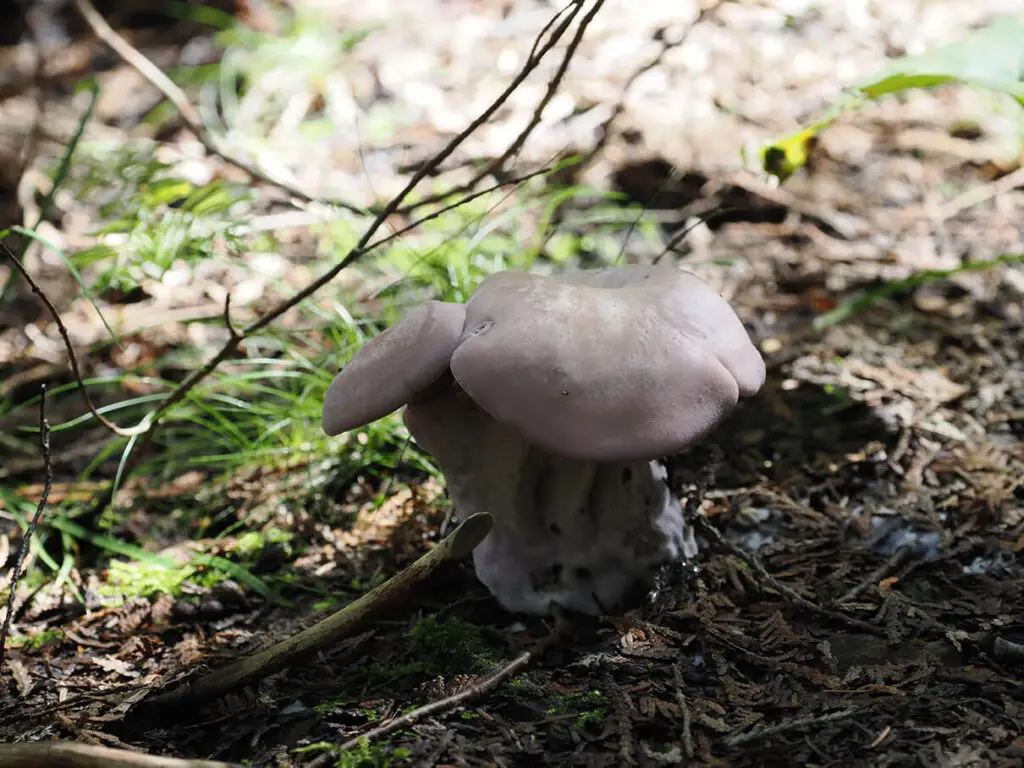
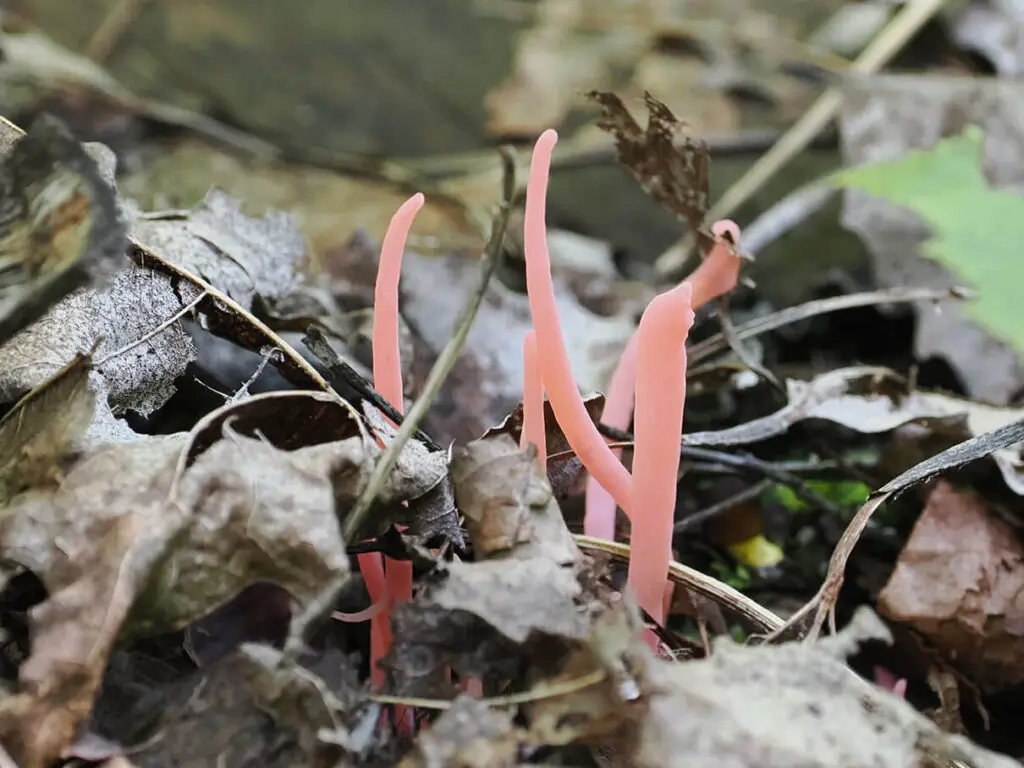
Now, why did I go around Rogers Pond twice? When I got home after the first hike I went to load the photos from my camera and found nothing. For the first time in fifteen years, it had suffered a silent card error and saved no photos, with no warning at all. I was super bummed out, especially thinking of all the unique things I had seen. So two days later I drove right back down and did the same hike again. I didn’t see all the same things, but I spotted most of the mushrooms—and caught a few new ones including the rare rose spindle, Clavulina rosea. And you better believe I checked my camera about a million times on the trail. Easily worth a redo!